
Menu

Powder blue gets its name from smalt — cobalt glass ground into a fine powder — but the pale, dusty blue we picture today isn’t the color that first carried the name. The name is older than the color. It started as a laundry trick in the 1650s, took its modern pale look from a Chinese porcelain glazing technique, and didn’t become an official color name until 1894. Two different stories, two centuries apart, both running through the same blue powder.
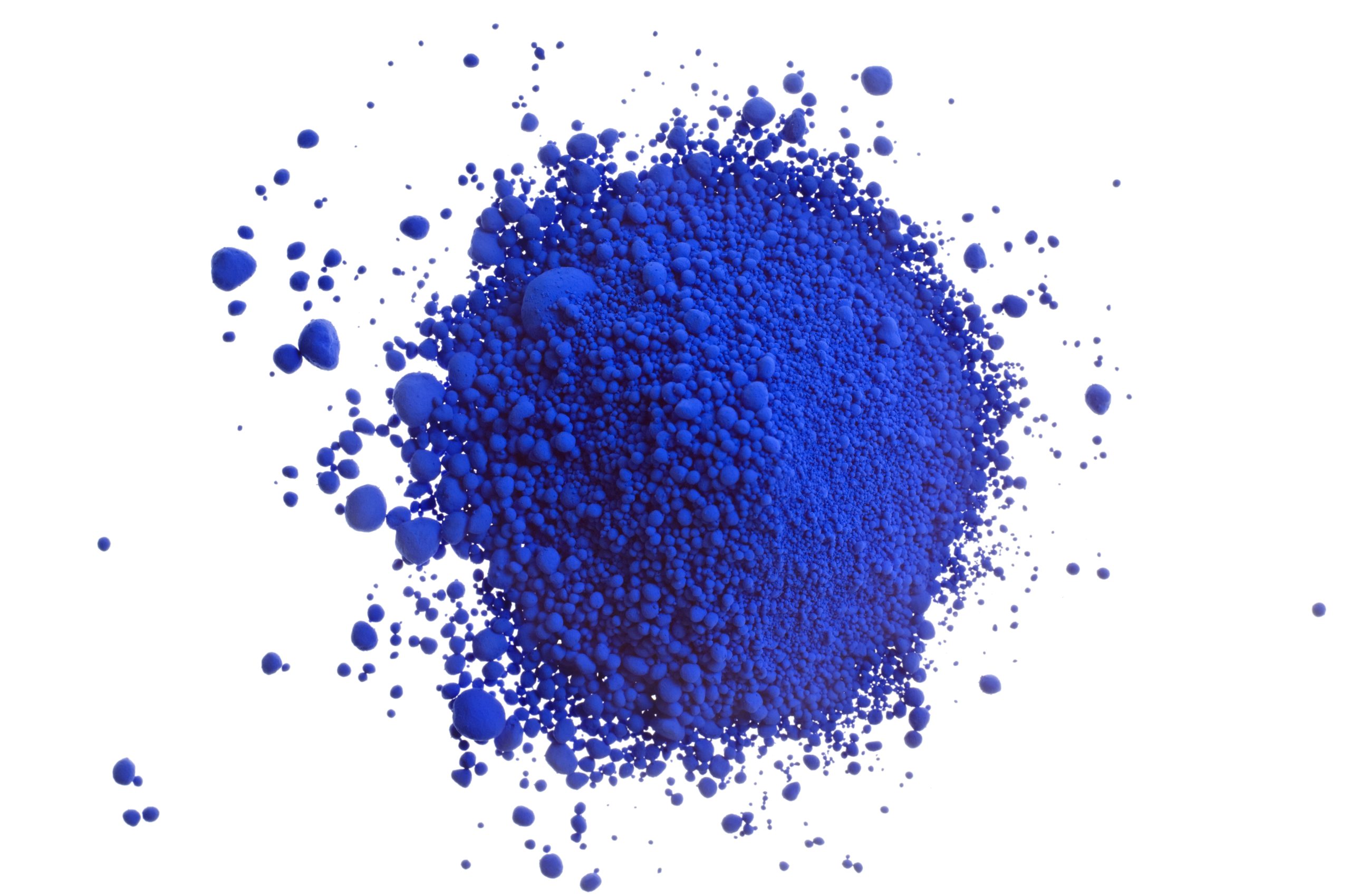
Long before “powder blue” meant a color at all, smalt was a workhorse pigment. Glassmakers fused cobalt oxide into glass, then ground it into a fine, deep-blue powder—the same cobalt blue used to color glass and ceramics since the 1500s. It’s intense and saturated, nothing like today’s soft pastel. The word “powder” in the name is literal: this was pulverized glass, sold by the pound to dyers, painters, and, as it turns out, laundresses (etymonline; Wikipedia).
That’s the raw material. What happened next split it into two completely separate uses—and only one of them was about color at all.

Here’s the part almost nobody guesses: “powder blue” started life as a cleaning product, not a paint chip.
White linens don’t stay white. Over time and repeated washing, they pick up a faint yellow-grey cast. Sometime around the 1650s, laundresses figured out a fix that sounds backward but works: add a little more blue. A pinch of powdered smalt stirred into the rinse water tinted the fabric just enough to counteract the yellowing — because blue and yellow sit on opposite sides of the color wheel, a whisper of blue reads to the human eye as “whiter,” not “bluer.” It’s the same optical trick behind old-fashioned laundry bluing bags and the brightening agents still used in detergent today.
This is the original “powder blue” — a product name for a cleaning powder, more than two centuries before anyone used the phrase to describe a shade of paint.
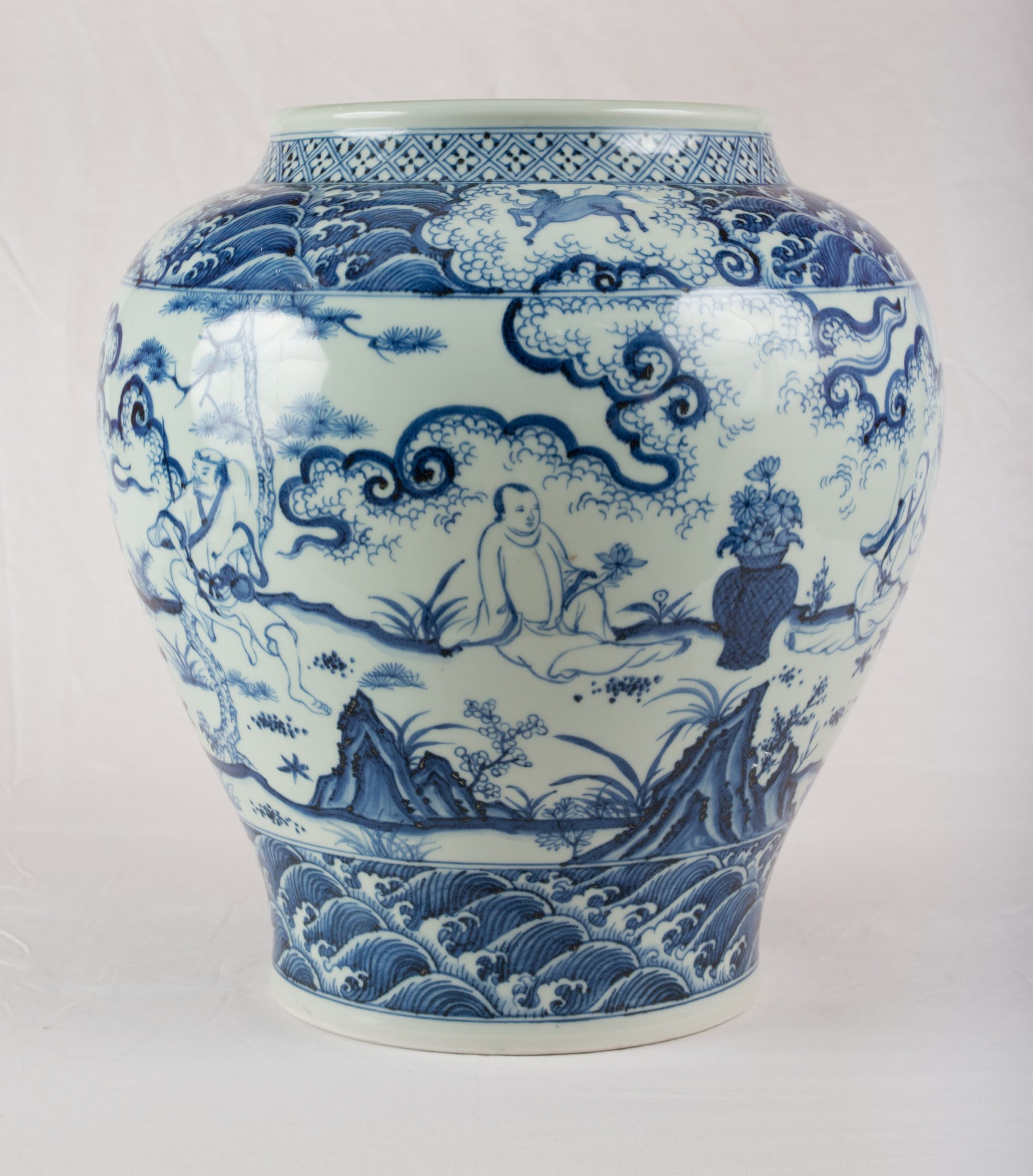
At almost the same moment, Chinese potters were putting the same raw material — powdered cobalt — to a completely different use.
Instead of painting cobalt onto porcelain in fine lines, artisans developed a technique for blowing the powder through a bamboo tube covered in gauze, scattering it across unfired porcelain in a fine, even speckle rather than a brushstroke. Once glazed and fired, the effect reads as a soft, mottled blue rather than the crisp painted patterns more typical of Chinese blue-and-white ware. The technique is best known from the Kangxi period (1662–1722), when it became a signature look in the Chinese export porcelain flooding into European collections — though some glossaries trace the method back further, to the Ming-dynasty Xuande period (Gotheborg glossary; Kevin Page Antiques; Skinner’s Kangxi field guide).
This is the detail that matters for the color story: fired thin and diluted by the white porcelain body underneath, that speckled cobalt doesn’t look as dark and saturated as raw smalt. It looks pale, soft, and dusted on — much closer to the color we now call powder blue than the original pigment ever was.
So which thread actually gave us the color name? The honest answer is: probably both, in sequence.
Sources agree that “powder blue” wasn’t standardized as a color name — the pale one — until 1894, more than two centuries after the laundry sense of the phrase first appeared. The laundry use supplied the words. But the laundry use describes a faint blue tint, not a specific, namable shade you could match to a swatch. The porcelain glaze, by contrast, produced exactly that: a consistent, recognizable, pale dusty blue that traveled through European collections for two hundred years before color-naming conventions caught up.
Put simply: the phrase “powder blue” existed for the laundry trick, and the porcelain glaze is the far more likely source of what the phrase came to look like once it was standardized as a paint and textile color. It’s worth being clear that this connective step — laundry gave the words, porcelain gave the look — is an inference from the two documented threads, not something stated outright in any single source. The two facts are well documented individually; the bridge between them is the most reasonable reading of how they fit together.
Whatever its exact path, the name settled on a color that’s stayed popular for the same reason smalt worked in the rinse water: it’s soft rather than loud. Modern powder blue sits pale and slightly grey-toned, at home in nurseries, vintage cars, and menswear the same way it once sat on porcelain shipped from Jingdezhen — quietly, and without much competition for attention.
Yes. The name comes from smalt, cobalt glass ground into a fine powder and used since the 1500s as a pigment, in laundry bluing, and in porcelain glazing.
No. Raw smalt is a deep, saturated blue. The pale, dusty version we call powder blue today more closely resembles how the pigment looked once diluted and fired into Chinese porcelain glazes.
1894 — over two centuries after the phrase first appeared, describing a laundry-whitening powder in the 1650s.


